
Few spirits are as deeply connected to American culture as bourbon. Whether it’s poured neat after a long day, shared among friends around a fire pit, or collected by enthusiasts searching for rare bottles, bourbon has earned a reputation as one of the world’s most beloved whiskeys.
Yet for many newcomers, bourbon can feel confusing. What Is Bourbon? Is bourbon the same as whiskey? Does it have to come from Kentucky? Why does one bottle taste sweet and smooth while another delivers bold spice and oak? And what do terms like “straight bourbon,” “single barrel,” and “barrel proof” actually mean?
If you’ve ever asked yourself these questions, you’re in the right place.
At BottleTruth.com, we celebrate the lifestyle and traditions that make bourbon more than just a drink. Behind every bottle lies a story of craftsmanship, American history, and generations of distillers perfecting their craft. Understanding bourbon not only helps you choose better bottles but also deepens your appreciation for the people and traditions that created America’s native spirit.
In this complete beginner’s guide, you’ll learn:
- What bourbon is and how it differs from other whiskeys
- Why bourbon is called bourbon
- The fascinating history of bourbon in America
- The legal requirements that define true bourbon
- How bourbon is made from grain to bottle
- The different styles and flavor profiles of bourbon
- How to taste and enjoy bourbon like a beginner
- The best bourbon brands to start with
- Common bourbon terms every enthusiast should know
Whether you’re buying your very first bottle or simply curious about what makes bourbon so special, this guide will give you everything you need to begin your journey with confidence.
Let’s start with the most important question of all:
What Is Bourbon?
Bourbon is a type of American whiskey made primarily from corn and aged in new charred oak barrels. While all bourbon is whiskey, not all whiskey is bourbon. In fact, bourbon follows a strict set of legal standards that make it one of the most carefully defined spirits in the world.
To be legally labeled as bourbon, it must be produced in the United States, contain at least 51% corn in its grain recipe, be distilled to specific proof levels, and mature in brand-new charred oak barrels. These requirements create the rich flavors that bourbon lovers know and appreciate-notes of vanilla, caramel, brown sugar, toasted oak, cinnamon, and sometimes dried fruit.
One of the biggest misconceptions is that bourbon must come from Kentucky. While Kentucky remains the heart of bourbon production and is home to many of the world’s most famous distilleries, bourbon can legally be produced anywhere in the United States.
What truly makes bourbon unique isn’t where it’s made-it’s how it’s made.
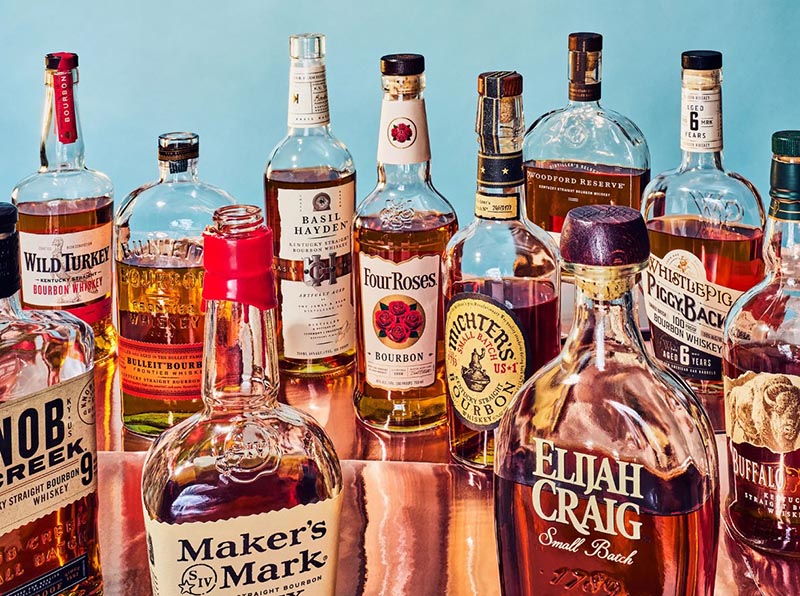
The combination of corn, fermentation, distillation, and new charred oak barrels creates a spirit unlike any other whiskey category. This distinctive process is responsible for bourbon’s naturally sweet, approachable character, making it one of the easiest whiskeys for beginners to enjoy.
Today, bourbon is experiencing a global renaissance. From casual drinkers discovering their first Old Fashioned to dedicated collectors hunting limited releases, interest in bourbon has never been higher. Understanding what bourbon is-and why it matters-is the first step toward appreciating one of America’s greatest contributions to the world of spirits.
Why Is Bourbon Called Bourbon?
One of the most frequently asked questions among whiskey newcomers is: “Why is bourbon called bourbon?”
While historians continue to debate the exact origin, the most widely accepted explanation connects bourbon to Bourbon County, Kentucky. During the late 18th and early 19th centuries, whiskey produced in this region became increasingly popular. Barrels shipped down the Ohio and Mississippi Rivers were often marked “Old Bourbon,” referring to their place of origin.
Over time, consumers began associating the name Bourbon with a particular style of whiskey rather than a geographic location. Eventually, the term became synonymous with the distinctive corn-based whiskey we know today.
Although modern bourbon can legally be made anywhere in the United States, the name remains closely linked to Kentucky and the early American frontier.
The History of Bourbon
To truly appreciate bourbon, it’s important to understand its roots.
Early American Settlers
Bourbon’s story begins with immigrants from Scotland, Ireland, and other parts of Europe who brought their distilling traditions to America. Many settled in Kentucky, where fertile farmland and abundant water created ideal conditions for agriculture and whiskey production.
Corn quickly became the dominant grain because it grew more successfully than barley in the region. Farmers often converted excess corn into whiskey because it was easier to transport and sell.
The Rise of Kentucky Bourbon
By the early 1800s, Kentucky had become America’s whiskey capital. Distillers refined their methods and began aging whiskey in charred oak barrels, which dramatically improved flavor and color.
This innovation helped create the sweet vanilla and caramel notes that define bourbon today.
Prohibition and Recovery
Like many spirits, bourbon suffered during Prohibition (1920–1933). Hundreds of distilleries closed, and only a handful survived.
Following repeal, the industry slowly recovered. Bourbon regained popularity throughout the mid-20th century before experiencing another major boom in the 2000s.
The Modern Bourbon Renaissance
Today, bourbon is one of the fastest-growing spirits categories in the world. Enthusiasts collect rare bottles, visit distilleries, join tasting clubs, and celebrate bourbon culture through apparel, glassware, and home bars.
The popularity of bourbon has transformed it from a regional American product into a global phenomenon.
Legal Requirements for Bourbon
Bourbon is one of the most tightly regulated spirits categories in the world.
To be legally called bourbon, a whiskey must:
- Be produced in the United States
- Contain at least 51% corn
- Be distilled to no more than 160 proof
- Enter the barrel at no more than 125 proof
- Be aged in new charred oak containers
- Contain no added flavoring, coloring, or additives
These rules ensure consistency and preserve the integrity of bourbon as a uniquely American spirit.
What Is Straight Bourbon?
A bottle labeled Straight Bourbon must meet additional standards:
- Aged for at least two years
- No additives
- If aged less than four years, the age must be stated on the label
Many bourbon enthusiasts view straight bourbon as the benchmark for quality.
How Bourbon Is Made
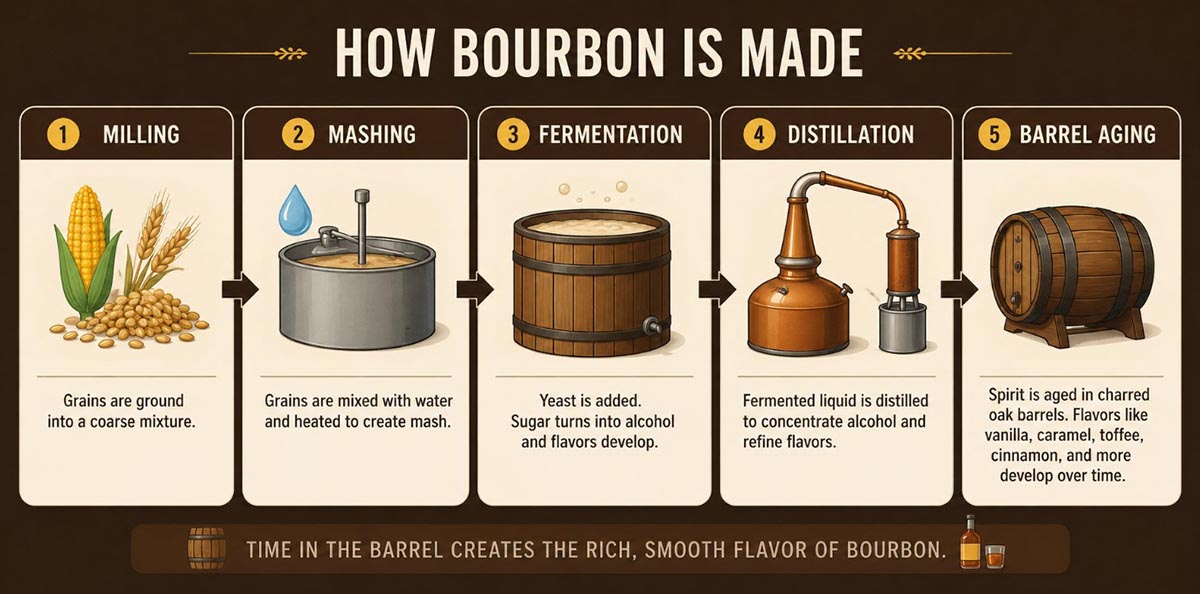
The journey from grain to glass involves several fascinating steps.
Step 1: Milling
Corn, rye, wheat, and malted barley are ground into a coarse grain mixture.
Step 2: Mashing
The grains are combined with water and heated to convert starches into fermentable sugars.
Step 3: Fermentation
Yeast is added to the mash. During fermentation, yeast converts sugar into alcohol while creating hundreds of flavor compounds.
Step 4: Distillation
The fermented liquid is distilled to concentrate alcohol and desirable flavors.
Step 5: Barrel Aging
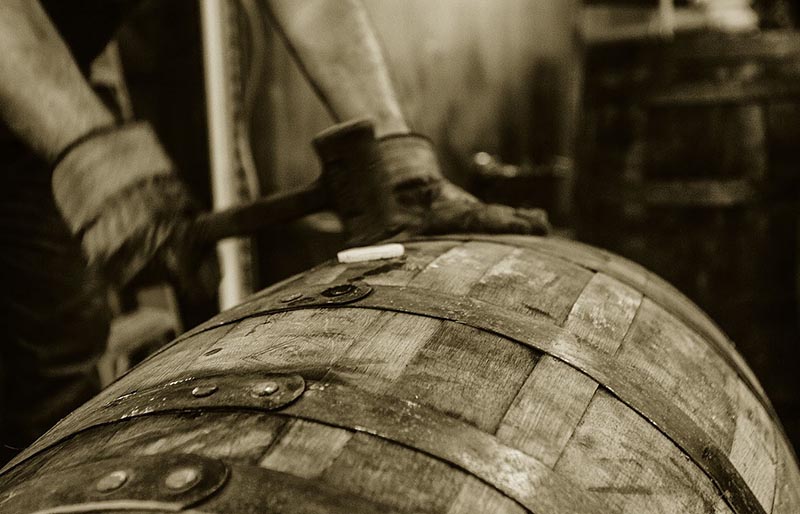
The new spirit enters freshly charred oak barrels.
As temperatures fluctuate throughout the seasons, the whiskey expands and contracts within the wood, extracting flavors such as:
- Vanilla
- Caramel
- Toffee
- Cinnamon
- Brown sugar
- Toasted oak
This aging process is largely responsible for bourbon’s distinctive character.
Bourbon vs Whiskey
Many beginners use the terms bourbon and whiskey interchangeably.
However, bourbon is simply one type of whiskey.
Think of whiskey as a broad category that includes:
- Bourbon
- Rye whiskey
- Scotch whisky
- Irish whiskey
- Tennessee whiskey
- Japanese whisky
Every bourbon is whiskey, but not every whiskey qualifies as bourbon.
The strict production rules make bourbon a unique subcategory within the larger whiskey family.
>>> Read more: What Is the Difference Between Bourbon and Whiskey?
Bourbon vs Scotch
Bourbon and Scotch are among the world’s most popular whiskies, yet they taste remarkably different.
Bourbon
Typical flavor notes include:
- Caramel
- Vanilla
- Honey
- Brown sugar
- Oak
Scotch
Typical flavor notes include:
- Malt
- Smoke
- Peat
- Sea salt
- Earthy characteristics
Many beginners find bourbon more approachable because of its sweeter flavor profile.
Bourbon vs Rye Whiskey
The primary difference lies in the grain recipe.
Bourbon
Must contain at least 51% corn.
Common characteristics:
- Sweeter
- Richer
- Smoother
Rye Whiskey
Must contain at least 51% rye grain.
Common characteristics:
- Spicier
- Peppery
- Herbal
If you enjoy bold spice, rye may become a favorite. If you prefer sweetness and vanilla notes, bourbon is often the better starting point.
Types of Bourbon
Not all bourbon tastes the same.
Traditional Bourbon
Balanced sweetness with moderate spice.
Wheated Bourbon
Uses wheat instead of rye as the secondary grain.
Common characteristics:
- Softer mouthfeel
- Sweeter profile
- Less spice
High-Rye Bourbon
Contains a higher percentage of rye grain.
Common characteristics:
- More spice
- Pepper notes
- Greater complexity
Single Barrel Bourbon
Bottled from a single barrel rather than blended barrels.
Each barrel can offer unique flavor variations.
Small Batch Bourbon
Produced from a selected group of barrels intended to create a consistent flavor profile.
Barrel Proof Bourbon
Bottled directly from the barrel with little or no dilution.
These expressions often deliver intense flavors and higher alcohol content.
Understanding Bourbon Proof
Proof measures alcohol strength.
The formula is simple:
Proof = ABV × 2
Examples:
- 80 proof = 40% ABV
- 100 proof = 50% ABV
- 120 proof = 60% ABV
For beginners, bourbons between 90 and 100 proof typically offer an ideal balance between flavor and drinkability.
Higher-proof bourbons can provide richer flavors but may require a more experienced palate.
What Does Bourbon Taste Like?
One reason bourbon has gained such a loyal following is its broad range of flavors.
Common tasting notes include:
Sweet Notes
- Caramel
- Honey
- Maple syrup
- Brown sugar
Fruit Notes
- Cherry
- Apple
- Orange peel
- Raisins
Spice Notes
- Cinnamon
- Nutmeg
- Clove
Oak Notes
- Toasted wood
- Leather
- Smoke
- Char
Every bourbon offers its own unique flavor profile based on ingredients, aging conditions, and barrel selection.
How to Taste Bourbon Like a Beginner
Tasting bourbon is a skill that improves over time.
Observe the Color
Look at the whiskey against a light background.
Darker shades often indicate longer aging or greater barrel influence.
Smell Before Drinking
Bring the glass to your nose and take gentle sniffs.
Try identifying aromas such as:
- Vanilla
- Caramel
- Fruit
- Oak
Take Small Sips
Allow the bourbon to coat your palate.
Focus on:
- Sweetness
- Spice
- Texture
- Finish
Add a Few Drops of Water
Water can reveal hidden aromas and flavors, especially in higher-proof bourbons.
Keep Notes
Recording your impressions helps you discover your personal preferences.
Best Bourbon Brands for Beginners
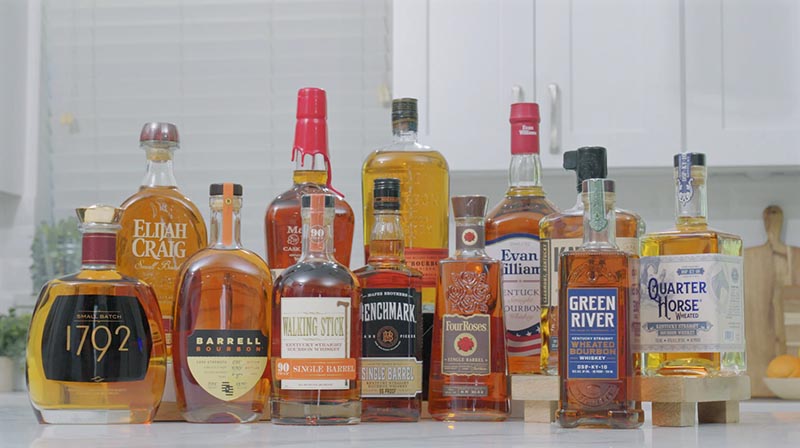
If you’re purchasing your first bottle, these brands offer excellent introductions to bourbon.
Maker’s Mark
A classic wheated bourbon known for smoothness and sweetness.
Buffalo Trace
Widely respected for its balance, value, and approachable flavor profile.
Woodford Reserve
Rich and complex with notes of chocolate, spice, and oak.
Four Roses Small Batch
Known for floral aromas and fruit-forward flavors.
Wild Turkey 101
A higher-proof option that delivers exceptional value and bold character.
Common Bourbon Terms Explained
Mash Bill
The grain recipe used to create bourbon.
Finish
The flavors that remain after swallowing.
Angel’s Share
The portion of whiskey lost to evaporation during aging.
Barrel Proof
Bourbon bottled at barrel strength without significant dilution.
Single Barrel
Whiskey sourced from one barrel.
Small Batch
A blend of selected barrels.
Understanding these terms makes shopping for bourbon significantly easier.
How to Choose Your First Bottle of Bourbon
New drinkers often wonder where to begin.
Here are a few practical tips:
- Start with bottles under 100 proof.
- Focus on reputable brands.
- Try both wheated and high-rye bourbons.
- Avoid chasing rare or expensive bottles initially.
- Develop your palate before building a collection.
The best bourbon for beginners is often the one that encourages exploration and enjoyment.
FAQs
Can bourbon be made outside Kentucky?
Yes. Bourbon can be produced anywhere in the United States as long as it meets legal requirements.
Is bourbon sweeter than whiskey?
Bourbon is generally sweeter than many other whiskey styles because of its high corn content and new charred oak aging.
Does bourbon get better with age?
Not always. While aging adds complexity, excessive aging can create overly woody flavors.
Is bourbon gluten-free?
Most experts consider distilled bourbon effectively gluten-free because the distillation process removes gluten proteins. However, individuals with medical concerns should consult healthcare professionals.
How long does bourbon last after opening?
An opened bottle can remain enjoyable for years when stored upright in a cool, dark place.
What is the best bourbon for beginners?
Many newcomers enjoy Maker’s Mark, Buffalo Trace, Woodford Reserve, and Four Roses due to their approachable flavor profiles.
Final Thoughts
Bourbon is more than just a whiskey category-it’s a symbol of American craftsmanship, tradition, and culture. From its roots on the Kentucky frontier to its status as one of the world’s most sought-after spirits, bourbon continues to attract new generations of enthusiasts.
For beginners, the journey starts with understanding the basics: corn, charred oak barrels, aging, and the unique laws that define bourbon. From there, every bottle offers an opportunity to explore new aromas, flavors, and stories.
Whether you’re enjoying your first pour, building a home bar, or searching for the perfect bourbon-themed gift, learning about bourbon is part of the experience itself.
At BottleTruth.com, we’re proud to celebrate bourbon culture through apparel, glassware, and lifestyle products designed for those who appreciate the truth behind every bottle.
Cheers to your bourbon journey.
